

What Is a Marketing Funnel? Stages and How to Optimize Them
If you’ve ever heard marketers talk about “top of funnel” or “moving leads down the funnel,” they’re referring to a marketing funnel one of the most important concepts in digital marketing.
But what is a marketing funnel? And how do you optimize each stage to drive more leads, sales, and customer loyalty?
In this post, we’ll break down what a marketing funnel is, explain each stage, and show you how to improve your funnel for better conversions.
🧠 What Is a Marketing Funnel?
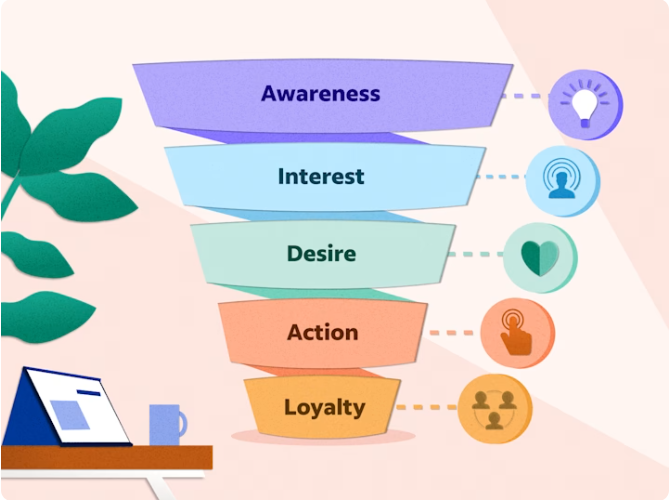
A marketing funnel is the path a potential customer takes from the first time they hear about your brand to the moment they make a purchase—and beyond.
It’s called a “funnel” because the number of people decreases at each stage. Many may be aware of your brand, but only a few will convert into paying customers.
Understanding your funnel helps you:
-
Identify gaps in your marketing
-
Create more targeted content
-
Increase conversions at every stage
📍 The 4 Main Stages of the Marketing Funnel
There are variations, but the most commonly used funnel stages are:
1. Awareness (Top of Funnel)
Goal: Get noticed by new audiences.
This is when people first discover your brand. They may see an ad, read a blog post, or find you on social media. They aren’t ready to buy yet—they’re just learning.
Tactics to use:
-
Blog posts
-
SEO
-
Social media content
-
YouTube videos
-
Paid ads
-
Infographics
-
Podcasts
How to optimize:
-
Focus on value-driven, educational content
-
Target long-tail SEO keywords
-
Promote content through the right channels
2. Consideration (Middle of Funnel)
Goal: Build trust and educate.
Now that people know you exist, they’re exploring solutions to their problem. They’re considering your product—but also your competitors.
Tactics to use:
-
Lead magnets (checklists, ebooks)
-
Email nurture sequences
-
Case studies
-
Webinars
-
Comparison guides
-
Product demos
How to optimize:
-
Use lead capture forms to collect emails
-
Segment your list based on behavior
-
Offer helpful, trust-building content
3. Conversion (Bottom of Funnel)
Goal: Turn leads into customers.
At this stage, people are close to buying—they just need a final push. They’re evaluating your offer, reading reviews, or looking for deals.
Tactics to use:
-
Free trials
-
Limited-time offers
-
Product pages
-
Testimonials and reviews
-
Live chat or consultations
-
Retargeting ads
How to optimize:
-
Simplify the checkout or sign-up process
-
Use persuasive copy and strong CTAs
-
Include social proof and risk-reversing guarantees
4. Loyalty & Advocacy (Post-Purchase)
Goal: Turn customers into repeat buyers and brand advocates.
The funnel doesn’t end at purchase. Loyal customers are more likely to buy again—and refer others.
Tactics to use:
-
Onboarding emails
-
Customer support content
-
Loyalty programs
-
Surveys and feedback forms
-
Referral incentives
-
Exclusive offers
How to optimize:
-
Follow up with thank-you and upsell emails
-
Provide a great customer experience
-
Ask happy customers for reviews or referrals
🧪 How to Measure Funnel Performance
To know what’s working and what needs fixing, track these key metrics at each stage:
| Funnel Stage | Key Metrics |
|---|---|
| Awareness | Website traffic, social reach, impressions, video views |
| Consideration | Email signups, bounce rate, time on page, webinar attendance |
| Conversion | Sales, conversion rate, cost per acquisition (CPA) |
| Loyalty | Repeat purchase rate, customer lifetime value (CLTV), referral rate |
Use tools like:
-
Google Analytics (site behavior)
-
CRM platforms (lead tracking)
-
Email marketing tools (engagement)
-
Ad managers (conversion tracking)
⚙️ Tips to Optimize Your Funnel
-
Map Your Content to Each Stage
Don’t sell too early. Provide the right type of content based on where your audience is in their journey. -
Use Retargeting
Remind visitors who didn’t convert with tailored ads or emails. -
A/B Test Everything
Headlines, landing pages, CTAs—test and improve continuously. -
Personalize Your Messaging
Use data and behavior to tailor your emails, offers, and content. -
Remove Friction
Simplify your forms, checkout process, and navigation to reduce drop-offs.
✅ Final Thoughts
A marketing funnel isn’t just a theory—it’s a practical framework for guiding your audience from stranger to customer to advocate.
When you understand how your funnel works and optimize each stage, you can:
-
Improve your marketing ROI
-
Build better customer relationships
-
Scale your business with more predictability
Start by auditing your current funnel, filling in the content gaps, and tracking your metrics. With a solid funnel in place, you’ll turn more curious visitors into loyal customers.


