
On-Page vs. Off-Page SEO: What’s the Difference and Why It Matters
When it comes to getting your website to rank on Google, SEO (Search Engine Optimization) is the name of the game. But SEO isn’t just one thing, it’s made up of several parts, and two of the most important are On-Page SEO and Off-Page SEO.
You need to understand both if you’re serious about increasing visibility, traffic, and trust online.
In this post, we’ll break down the key differences between On-Page and Off-Page SEO, how they work together, and why both matter to your digital marketing success.
🔍 What Is On-Page SEO?
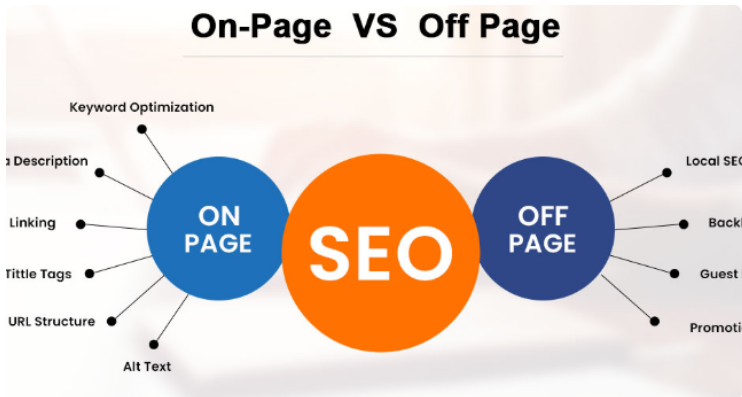
On-Page SEO refers to the elements you can control on your website to improve your search engine rankings. It involves optimizing your content, HTML source code, and site structure to make it easier for search engines to understand what your pages are about.
✅ Key On-Page SEO Elements:
-
Title tags: The clickable headline that appears in search results.
-
Meta descriptions: A short summary of your page (helps increase click-through rate).
-
Header tags (H1, H2, H3…): Structure your content for easy reading and relevance.
-
Keyword usage: Including relevant keywords naturally in your content.
-
Image alt text: Describes images for accessibility and SEO.
-
Internal linking: Links to other pages on your website to improve navigation and authority.
-
URL structure: Clean, descriptive URLs that reflect the page topic (e.g.,
/seo-basicsinstead of/page1). -
Page speed and mobile responsiveness: Ensuring fast loading and a good experience on all devices.
-
Content quality: Informative, original, and valuable content that answers the user’s intent.
🧠 Why It Matters:
Search engines like Google prioritize pages that are well-structured, keyword-relevant, and user-friendly. On-page SEO ensures your content is optimized for both users and search engine crawlers.
🌐 What Is Off-Page SEO?
Off-Page SEO refers to the actions taken outside of your website to influence your rankings within search engine results pages (SERPs). It’s primarily about building your site’s authority, trust, and reputation.
✅ Key Off-Page SEO Elements:
-
Backlinks: Links from other reputable websites pointing to your site.
-
Social media signals: Shares, likes, and mentions that boost visibility.
-
Guest blogging: Writing on other websites to gain exposure and backlinks.
-
Influencer outreach: Collaborating with influencers who link to or promote your content.
-
Brand mentions: Unlinked mentions of your brand can still contribute to trust and relevance.
-
Online reviews and ratings: Especially important for local SEO.
🧠 Why It Matters:
Think of off-page SEO as word-of-mouth marketing for your website. When other trusted websites link to your content, it signals to search engines that your site is credible, which can significantly improve your rankings.
🔁 On-Page vs. Off-Page SEO: Side-by-Side Comparison
| Feature | On-Page SEO | Off-Page SEO |
|---|---|---|
| Focus Area | Your website’s internal elements | External factors influencing your site |
| Control Level | Full control | Limited control (relies on others) |
| Examples | Keywords, title tags, content structure | Backlinks, social shares, guest posts |
| Purpose | Make your site understandable and relevant | Build authority and trust |
| Impact Timeline | Faster results (weeks) | Slower build-up, but long-lasting benefits |
🧩 Why You Need Both for SEO Success
Relying on just one aspect of SEO is like trying to win a race with one shoe. On-page SEO helps you get noticed by search engines and deliver value to your visitors, while off-page SEO builds your site’s authority and trust in the eyes of Google.
Together, they:
-
Improve your website’s visibility and click-through rate
-
Build domain authority, making your site more competitive
-
Create a balanced and future-proof SEO strategy
✅ Simple Steps to Get Started
For On-Page SEO:
-
Use tools like Yoast SEO or Rank Math on WordPress.
-
Perform a content audit and update old blog posts.
-
Make sure your site is mobile-friendly and fast.
For Off-Page SEO:
-
Reach out for guest post opportunities.
-
Share your content regularly on social media.
-
Join industry directories or communities for backlinks.
💬 Final Thoughts
SEO is not a one-time task—it’s an ongoing effort. Understanding the difference between On-Page and Off-Page SEO gives you a clear path to build both a strong foundation and a trusted reputation online.
When done right, these two strategies work hand in hand to bring in more traffic, build trust, and grow your business.


