

Repurposing Content: Do More With Less
In the fast-paced world of content marketing, there’s constant pressure to create more blog posts, videos, social updates, emails, and podcasts. But what if you could grow your reach without starting from scratch every time?
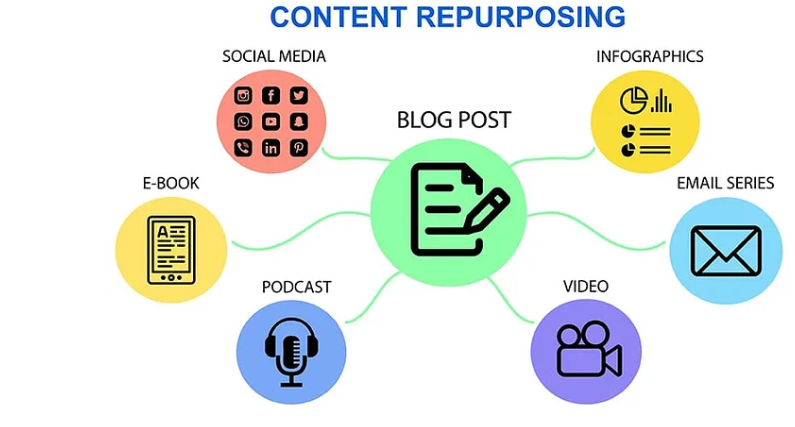
Enter content repurposing, the art of turning one piece of content into multiple assets across various platforms. It’s a smart, sustainable way to amplify your message, stretch your resources, and get more ROI from every piece of content you create.
Here’s how to make it work.
What Is Content Repurposing?
Content repurposing means taking an existing piece of content and adapting it into a new format or for a different channel.
For example:
-
A blog post becomes a video or infographic
-
A webinar becomes a podcast episode or blog series
-
A customer case study becomes multiple social media quotes
It’s not duplication—it’s strategic reimagining.
Why You Should Repurpose Content
Here’s what makes content repurposing a no-brainer for busy marketers and small businesses:
✅ Maximize ROI
You’ve already invested time and energy creating great content. Repurposing helps you squeeze every ounce of value from it.
✅ Save Time & Resources
Creating from scratch takes time. Repurposing is faster and more efficient, especially for small teams.
✅ Reach New Audiences
Different people prefer different formats. Repurposing allows you to meet them where they are—whether they’re readers, listeners, or viewers.
✅ Boost SEO and Visibility
Repurposing across platforms and formats increases your content’s footprint, giving you more chances to rank, be discovered, and drive traffic.
✅ Reinforce Your Message
Repetition builds recognition. When you present the same core idea in different ways, you increase the chances it sticks with your audience.
Content Repurposing Examples That Work
Here are some real-life ways to do more with less:
🔁 Blog Post → Video Script
Turn a how-to article into a short YouTube or Instagram video. You already have the structure—just adapt it for the camera.
🔁 Webinar → Blog Series
Break a 60-minute webinar into 3–5 smaller blog posts or thought-leadership pieces.
🔁 Podcast Episode → Quote Graphics
Pull out key insights or memorable quotes, and design them as shareable images for LinkedIn or Instagram.
🔁 Whitepaper → Email Drip Campaign
Segment a long-form guide into a series of value-packed emails.
🔁 Case Study → Social Carousel
Highlight results and testimonials in a visual carousel post for LinkedIn or Facebook.
🔁 Stats Roundup → Infographic
Take a blog filled with industry stats and turn it into a visually engaging infographic.
How to Identify Content Worth Repurposing
Not all content needs to be repurposed. Focus on high-performing or evergreen assets:
📌 Evergreen topics – Timeless advice, how-tos, or definitions
📌 Top-performing posts – Check Google Analytics or social insights
📌 Long-form content – eBooks, webinars, whitepapers
📌 Thought leadership pieces – Strong opinions or original insights
If a piece gets steady traffic, engagement, or conversions—it’s a strong candidate.
Tips for Successful Repurposing
-
Tailor for the platform – A tweet won’t work as-is on LinkedIn. Adapt tone, format, and length.
-
Update when needed – If the original content is old, freshen it up before repurposing.
-
Use templates – Create reusable templates for quotes, carousels, or stories to speed up the process.
-
Batch your efforts – Plan your repurposing in batches to save time and stay organized.
Example: One Blog, Multiple Assets
Let’s say you wrote a blog post:
“10 Tips to Improve Your Email Open Rates”
You can repurpose it into:
-
A YouTube video: “Top 3 Tips to Boost Email Opens Fast”
-
An Instagram carousel: “Email Open Rates – What Works in 2025”
-
A LinkedIn post: Ask your audience, “Which email subject lines work best for you?”
-
An email newsletter: “Our favorite tip from this week’s blog”
-
A podcast mini-episode: “Why your subject line might be killing your open rate”
One piece becomes five—without creating five new ideas from scratch.
Final Thoughts
Content repurposing is the smartest way to scale your marketing without burning out. Instead of constantly chasing new ideas, you’re maximizing the impact of the content you’ve already worked hard to create.


