

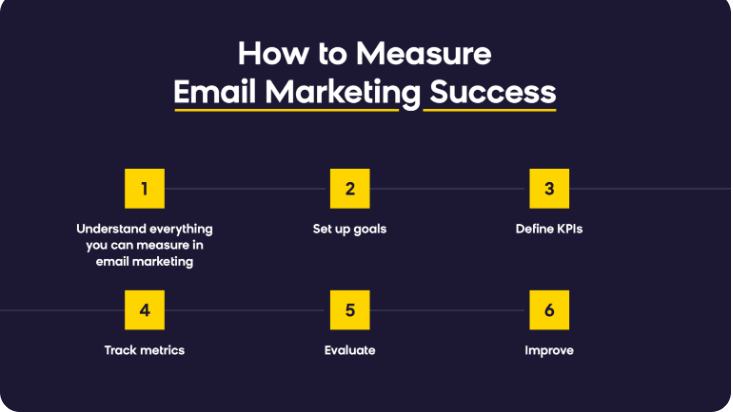
Measuring Email Marketing Success: Key Metrics to Track
You’ve crafted the perfect email campaign: compelling copy, a killer subject line, and a beautifully designed layout. But once you hit “send,” how do you know if it actually worked?
Welcome to the world of email marketing metrics, where data gives you the clarity to improve, grow, and win more conversions.
In this post, we’ll break down:
-
Why email metrics matter
-
The top KPIs (Key Performance Indicators) you should track
-
What each metric tells you
-
Industry benchmarks to aim for
-
Tips for improving your numbers
Let’s dive in and make sense of the numbers behind the emails.
🧠 Why Email Metrics Matter
Email marketing without measurement is like flying blind. You need data to:
-
Understand what’s working (and what’s not)
-
Optimize future campaigns
-
Prove ROI to your team or clients
-
Improve deliverability and subscriber experience
The good news? Email marketing is very measurable — you just need to know which metrics to watch.
🔑 Key Email Marketing Metrics to Track
1. Open Rate
What it is: The percentage of recipients who open your email.
Why it matters: It indicates how well your subject line and sender name are performing.
Formula:(Emails opened ÷ Emails delivered) x 100
Benchmark: ~20–25% (varies by industry)
✅ Tips to improve:
-
Test subject lines
-
Use recognizable sender names
-
Avoid spammy words
2. Click-Through Rate (CTR)
What it is: The percentage of recipients who clicked a link in your email.
Why it matters: Shows how engaging your content and call-to-action (CTA) are.
Formula:(Clicks ÷ Emails delivered) x 100
Benchmark: ~2–5%
✅ Tips to improve:
-
Use clear, actionable CTAs
-
Include only 1–2 links to avoid distraction
-
Make buttons visually prominent
3. Click-to-Open Rate (CTOR)
What it is: The percentage of people who clicked after opening the email.
Why it matters: Measures how compelling your content is to those who open it.
Formula:(Clicks ÷ Opens) x 100
Benchmark: ~10–20%
✅ Tips to improve:
-
Align email content with subject line promises
-
Use curiosity or urgency in your CTA
4. Conversion Rate
What it is: The percentage of recipients who completed your desired goal (purchase, signup, etc.)
Why it matters: This is the ultimate success metric — it ties email to real business results.
Formula:(Conversions ÷ Emails delivered or clicked) x 100
Benchmark: Varies based on the goal
✅ Tips to improve:
-
Optimize landing pages
-
Match messaging between email and page
-
Keep the user journey friction-free
5. Bounce Rate
What it is: The percentage of emails that couldn’t be delivered.
Types:
-
Hard bounce = Invalid email address
-
Soft bounce = Temporary issue (e.g., full inbox)
Formula:(Bounced emails ÷ Emails sent) x 100
Benchmark: Under 2%
✅ Tips to improve:
-
Regularly clean your list
-
Use double opt-in to confirm addresses
6. Unsubscribe Rate
What it is: The percentage of recipients who opt out after receiving your email.
Why it matters: Tells you if you’re sending too often or missing the mark on content.
Formula:(Unsubscribes ÷ Emails delivered) x 100
Benchmark: Under 0.5%
✅ Tips to improve:
-
Set expectations during signup
-
Let subscribers choose email frequency
7. Spam Complaint Rate
What it is: The percentage of recipients who mark your email as spam.
Why it matters: High complaints damage your sender reputation and deliverability.
Benchmark: Less than 0.1%
✅ Tips to improve:
-
Never buy lists
-
Use clear unsubscribe links
-
Only email people who’ve opted in
🎯 Advanced Metrics to Watch (Bonus)
-
List Growth Rate: How fast your list is growing (new subs – unsubscribes)
-
Email ROI:
(Revenue - Cost) ÷ Cost x 100 -
Forward/Share Rate: Who’s sharing your email with others
-
Engagement Over Time: How your emails perform across hours/days
📈 What to Do With the Data
-
Track trends, not just individual sends
-
A/B test subject lines, CTA buttons, send times
-
Use metrics to segment your audience (e.g., send special offers to high clickers)
-
Remove consistently inactive subscribers to improve deliverability
🏁 Final Thoughts
Email marketing isn’t just about sending — it’s about learning and improving. By tracking the right metrics, you’ll:
-
Make smarter decisions
-
Increase conversions
-
Build stronger relationships with your audience
So, take a peek under the hood of your next campaign. The numbers are trying to tell you something — make sure you’re listening.


