
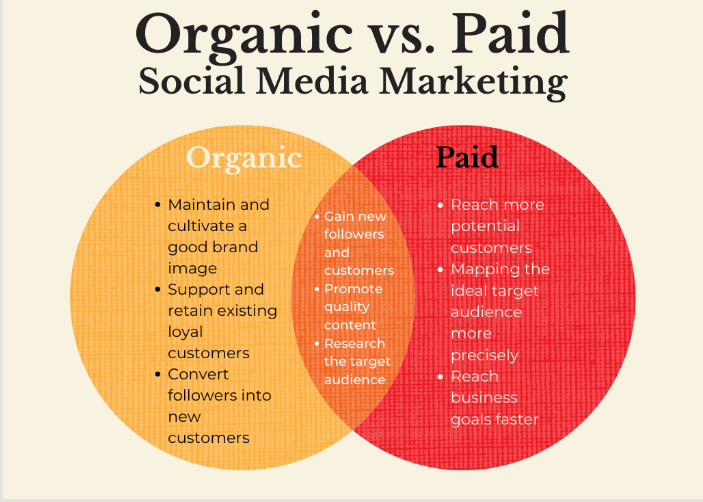
Organic vs. Paid Social: What’s the Difference?
In today’s digital-first world, social media plays a critical role in how businesses connect with their audiences. But one question still confuses many marketers: What’s the difference between organic and paid social, and when should you use each?
Let’s break it down simply, compare the pros and cons, and explore how both strategies can work together to power your social media marketing in 2025.
What Is Organic Social Media?
Organic social refers to the free content you post on social media platforms, posts, stories, reels, tweets, and videos that reach your audience without paid promotion.
Examples include:
-
A behind-the-scenes Instagram story
-
A LinkedIn article shared by your CEO
-
A Facebook post promoting a blog
-
A tweet responding to a trending topic
Organic social helps you build community, share your brand voice, and nurture long-term engagement.
Benefits of Organic Social:
-
Free (no ad budget required)
-
Builds trust and authenticity
-
Great for brand storytelling
-
Ideal for customer engagement and service
Limitations:
-
Reach is limited by algorithms
-
Growth can be slow
-
Not ideal for fast conversions
What Is Paid Social Media?
Paid social involves paying to promote your content on platforms like Facebook, Instagram, LinkedIn, X (Twitter), TikTok, or Pinterest. This includes:
-
Boosted posts
-
Sponsored stories
-
Social display ads
-
Lead generation forms
-
Retargeting campaigns
Paid social allows you to target specific audiences based on location, interests, demographics, or behavior, something organic posts can’t do with precision.
Benefits of Paid Social:
-
Quick reach and scalable traffic
-
Highly targeted campaigns
-
Great for promotions, launches, and lead generation
-
Easier to track ROI
Limitations:
-
Requires budget
-
Needs ongoing testing and optimization
-
Poor creative = wasted spend
Organic vs. Social: Side-by-Side Comparison
| Feature | Organic Social | Social |
|---|---|---|
| Cost | Free (except for time/labor) | Requires ad spend |
| Reach | Limited by algorithm | Wide, targeted reach |
| Speed | Slow to grow | Fast results |
| Targeting | Followers & interactions | Demographics, interests, behaviors |
| Goal | Build brand & community | Drive traffic, leads, sales |
| Tracking | Limited analytics | In-depth metrics & conversions |
When to Use Organic Social
Organic social is your foundation. It’s where you:
-
Build long-term relationships
-
Show your brand personality
-
Provide value through content
-
Engage with your community
-
Support customers via DMs and comments
Best used for:
-
Consistent posting strategy
-
Community engagement
-
Thought leadership and storytelling
-
Customer feedback and interaction
When to Use Social
Use paid social when you need to move fast or scale up. Whether you’re launching a product, running a promotion, or trying to generate leads, paid social gets your message out quickly.
Best used for:
-
Driving traffic and sales
-
Targeting specific customer personas
-
Testing new offers or content
-
Retargeting warm leads
🤝 The Power of Combining Organic + Paid
The smartest social media strategies don’t choose one over the other—they blend both.
Example:
-
Post organically about a new blog → see what gets traction
-
Boost the top-performing post to a wider audience
-
Use retargeting ads to reach viewers with a product offer
Organic builds trust and engagement.
Paid accelerates visibility and growth.
Together? They’re unstoppable.
✅ Final Thoughts
Organic and paid social aren’t rivals—they’re teammates.
If you’re a brand just starting out, build your organic presence first. Then, use paid campaigns strategically to boost your best content, test new audiences, and drive conversions.
Remember, success on social media isn’t about choosing sides. It’s about choosing what works right now for your goals, your audience, and your resources.


