
On-Page SEO vs. Off-Page SEO: Key Differences and Best Practices
If you want your website to rank higher on Google and attract the right traffic, mastering both on-page and off-page SEO is essential. While they work together toward the same goal of improving your site’s visibility in search engines, they focus on different optimization aspects.
In this post, we’ll break down the key differences between on-page and off-page SEO, and give you actionable best practices to improve both.
What Is On-Page SEO?
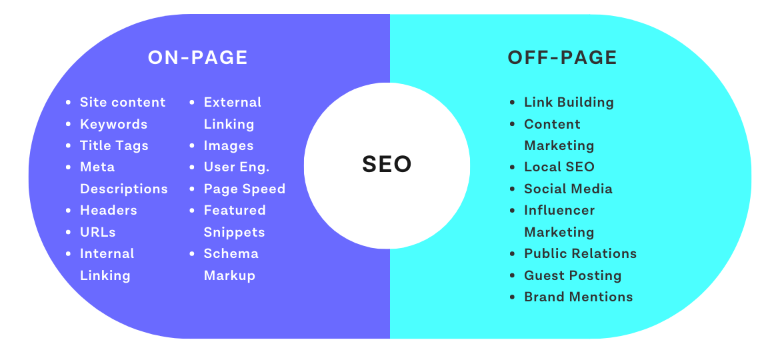
On-page SEO refers to all the actions you can take on your website to improve its search visibility. It involves optimizing both the content and HTML source code of your web pages.
Key Elements of On-Page SEO:
-
Title Tags: Clear, keyword-rich titles that reflect the page topic.
-
Meta Descriptions: Concise summaries that encourage clicks.
-
Headings (H1, H2, H3): Structured headers for readability and keyword targeting.
-
URL Structure: Clean, descriptive URLs (e.g.,
example.com/on-page-seo-guide). -
Keyword Optimization: Using target keywords naturally throughout the content.
-
Internal Linking: Connecting related pages within your website.
-
Image Optimization: Including alt text, descriptive filenames, and compressed images.
-
Mobile-Friendliness: Responsive design for users on all devices.
-
Page Speed: Fast-loading pages for better user experience and rankings.
On-Page SEO Best Practices:
-
Conduct keyword research before creating content.
-
Use one primary keyword per page and a few related ones.
-
Keep content clear, valuable, and easy to scan.
-
Optimize images and videos for performance and accessibility.
-
Regularly audit and update old pages to stay relevant.
What Is Off-Page SEO?
Off-page SEO refers to actions taken outside of your website that influence your rankings. It’s largely about building your site’s authority, trust, and reputation across the web.
Key Elements of Off-Page SEO:
-
Backlinks: Links from other websites pointing to yours (still a top-ranking factor).
-
Social Media Signals: Shares, likes, and engagement can indirectly influence visibility.
-
Online Mentions: Brand mentions in forums, blogs, or news sites—even without links.
-
Influencer Outreach: Collaborating with people who can promote your content.
-
Guest Blogging: Writing valuable content for other sites to build links and authority.
-
Business Listings & Citations: Especially important for local SEO (e.g., Google Business Profile).
Off-Page SEO Best Practices:
-
Focus on earning backlinks from authoritative and relevant websites.
-
Create high-quality, shareable content that others naturally want to reference.
-
Participate in industry communities (forums, Reddit, Quora).
-
Build relationships with influencers and thought leaders.
-
Avoid black-hat tactics like buying links—these can get your site penalized.
On-Page vs. Off-Page SEO: Key Differences at a Glance
| Aspect | On-Page SEO | Off-Page SEO |
|---|---|---|
| Location | On your website | Outside your website |
| Control | Full control (you manage it) | Limited control (relies on others) |
| Focus Areas | Content, keywords, meta tags, structure | Backlinks, authority, reputation |
| Primary Goal | Relevance and user experience | Trust and domain authority |
| Tools to Use | Yoast SEO, Google Search Console | Ahrefs, Semrush, BuzzSumo |
Which Is More Important?
Both are crucial for a well-rounded SEO strategy. On-page SEO ensures your content is readable and relevant, while off-page SEO builds the authority needed to rank competitively in search results.
If you’re just starting out, prioritize on-page SEO first—because without high-quality, optimized content, off-page efforts will fall flat.
Final Thoughts
SEO isn’t a one-time task—it’s an ongoing process of optimizing your website and earning trust from others on the web. By understanding the differences between on-page and off-page SEO and following best practices for each, you’ll be well on your way to better rankings, traffic, and conversions.


