

How to Do a Content Audit (And Why You Should)
Content is the fuel that drives your digital marketing engine, but even the best content can lose its spark over time. That’s where a content audit comes in.
Think of it like spring cleaning for your website. You evaluate what content you already have, what’s working, what’s outdated, and what needs improvement. The result? A leaner, smarter content strategy that performs better and delivers real results.
Whether you’re a solopreneur, content marketer, or brand strategist, here’s everything you need to know about how to do a content audit—and why it’s worth your time.
What Is a Content Audit?
A content audit is a systematic review and analysis of all the content on your website or platform. It involves taking inventory of your content assets (like blog posts, landing pages, videos, guides), evaluating their performance, and making informed decisions about what to:
-
Keep
-
Update
-
Merge
-
Delete
This process helps you improve SEO, user experience, and conversion rates by aligning content with your goals and audience needs.
Why You Should Audit Your Content
Here are 6 key reasons to run a content audit:
✅ Improve SEO: Outdated or underperforming content can drag your rankings down
✅ Boost Performance: Identify what content drives the most traffic, leads, or engagement
✅ Spot Gaps: Find opportunities for new topics or formats
✅ Enhance UX: Remove duplicate or irrelevant content that clutters the user journey
✅ Align with Business Goals: Ensure all content supports your current marketing objectives
✅ Repurpose Assets: Turn old blog posts into new formats (e.g., social posts, infographics)
How to Do a Content Audit in 7 Steps
1. Set Clear Goals
Start with the “why.” Define what you want to achieve with your audit:
-
Improve organic search visibility?
-
Increase conversions or lead quality?
-
Improve content quality and consistency?
-
Align old content with new brand messaging?
🎯 Example Goal: Increase organic traffic by 25% in 6 months by updating outdated blog content.
2. Create a Content Inventory
List all the content pieces on your site. For most people, this means blog posts, landing pages, service pages, and maybe gated content like PDFs.
🛠 How to collect your content:
-
Use tools like Screaming Frog, Ahrefs, SEMrush, or Google Search Console
-
Export a list from your CMS (like WordPress)
-
Or manually list your content if your site is small
Include columns like:
-
URL
-
Title
-
Content type
-
Date published/updated
-
Author
3. Gather Performance Data
For each content piece, collect key performance metrics to evaluate effectiveness.
📊 Metrics to include:
-
Pageviews (Google Analytics)
-
Bounce rate
-
Average time on page
-
Backlinks
-
Keyword rankings (Ahrefs, SEMrush, GSC)
-
Social shares
-
Conversions or goals completed
This will help you identify what’s performing well—and what needs attention.
4. Evaluate Content Quality and Relevance
Review each content piece to determine:
-
Is it still relevant and accurate?
-
Is the messaging consistent with your brand?
-
Does it match current SEO best practices?
-
Is the formatting clear and engaging?
-
Does it have outdated links, stats, or CTAs?
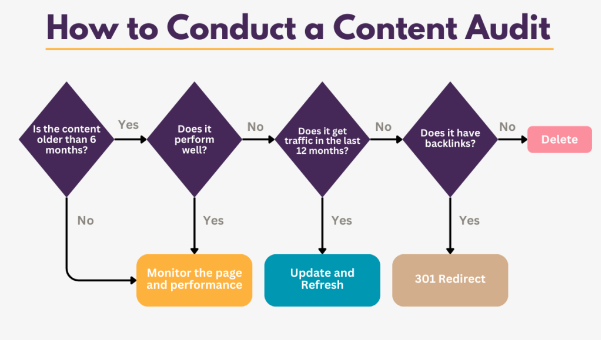
Give each piece a status tag like:
-
Keep (still relevant and performing well)
-
Update (still valuable but needs improvement)
-
Merge (combine with similar content)
-
Remove (no longer useful or relevant)
5. Prioritize Your Actions
Now that you’ve tagged everything, prioritize based on potential impact and effort. Focus first on high-potential updates—pages with decent traffic but outdated info or poor optimization.
🧠 Pro tip: Use a color-coded spreadsheet or content dashboard to visualize what to tackle first.
6. Take Action
This is where the magic happens. Based on your audit, start improving your content:
-
Refresh outdated blog posts with new data and examples
-
Optimize for keywords and on-page SEO
-
Add better internal links and CTAs
-
Combine thin or duplicate content into one stronger post
-
Unpublish or redirect irrelevant pages
Consistency is key—make sure your updates align with your brand voice and goals.
7. Monitor and Repeat
A content audit isn’t one-and-done. Aim to review your content at least once or twice a year—or quarterly if you publish often.
Track changes and performance after updates. Are traffic and engagement improving? Are you ranking higher for target keywords?
Use what you learn to fine-tune future content creation.
Final Thoughts
A content audit may seem time-consuming, but it’s one of the most powerful tools in your content marketing toolbox. It helps you get more out of what you’ve already created—and ensures your strategy stays sharp, relevant, and effective.
Start small if needed. Audit your top 20–30 pages and expand from there. The insights you uncover will pay dividends in better content, higher rankings, and stronger results.


