
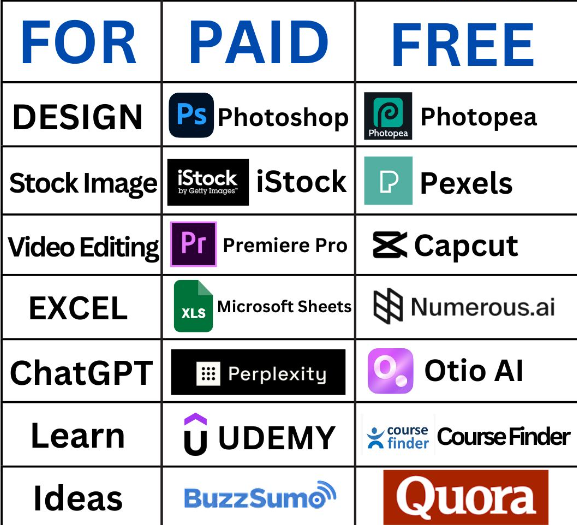
Free vs. Paid Marketing Tools: What’s Worth the Investment?
In the ever-evolving world of digital marketing, tools can make or break your productivity, performance, and ROI. But with so many options on the market, many of them free, marketers often ask: Do I need to pay for tools, or can I get by with the free ones?
The short answer? It depends.
In this post, we’ll break down the pros and cons of free vs. paid marketing tools, explore which categories truly benefit from premium features, and help you decide what’s worth the investment.
Free Marketing Tools: Strengths and Shortcomings
✅ Pros of Free Tools:
-
Cost-Effective: Great for startups, solopreneurs, and small teams with limited budgets.
-
Easy to Try: No financial commitment means you can experiment risk-free.
-
Often Very Capable: Tools like Google Analytics, Canva (free version), and Mailchimp’s free tier can do a lot out of the box.
❌ Cons of Free Tools:
-
Feature Limitations: Basic plans often come with restrictions—limited projects, templates, or user seats.
-
Data Caps or Export Limits: You may not get full access to your data or insights.
-
Watermarks/Branding: Many free tools include branding or limit design options.
-
Lack of Support: Free tools often come with little to no customer service.
Best Use Cases for Free Tools:
-
Early-stage experimentation
-
Basic email newsletters (Mailchimp Free)
-
Social scheduling (Buffer Free or Later Free)
-
Entry-level design (Canva Free)
-
Basic web analytics (Google Analytics, Search Console)
Paid Marketing Tools: When It’s Worth Paying
✅ Pros of Paid Tools:
-
Advanced Features: Automations, A/B testing, AI tools, custom branding, CRM integrations, and more.
-
Better Data & Insights: Access to more robust analytics, dashboards, and forecasting.
-
Higher Limits & Speed: More users, faster performance, unlimited campaigns.
-
Priority Support: Most paid plans offer live chat, email, or phone support.
Cons of Paid Tools:
-
Cost Adds Up Fast: Subscription models can quickly balloon, especially if you stack multiple tools.
-
Learning Curve: Advanced features often mean more complexity.
-
Not Always Necessary: Many paid tools replicate functions you may already have access to elsewhere.
Best Tools to Consider Paying For:
-
SEO & Keyword Research: Semrush, Ahrefs, or Ubersuggest Pro offer deep insights that are worth the price.
-
Marketing Automation: HubSpot, ActiveCampaign, or ConvertKit scale your campaigns efficiently.
-
Analytics & Heatmapping: Hotjar, Crazy Egg, or Mixpanel give you user experience insights that free tools don’t.
-
Design & Video Editing: Canva Pro, Adobe Creative Cloud, or Descript elevate your creative quality.
-
Project & Content Management: Notion, Trello Premium, or CoSchedule help streamline your workflow.
Free vs. Paid: What’s Worth the Investment?
| Tool Category | Free Usually Works | Paid Is Worth It When… |
|---|---|---|
| Email Marketing | For small lists and basic sends | You need automation, segmentation, or high volume |
| SEO | For beginner research | You want competitor analysis, backlinks, and rank tracking |
| Social Scheduling | For one or two platforms | You manage multiple brands or need detailed reports |
| Analytics | Google Analytics is powerful | You want behavior heatmaps, user tracking, and attribution |
| Graphic Design | Canva Free is solid | You want brand kits, templates, or to remove watermarks |
| Video Creation | Basic tools or mobile apps | You need pro editing, captions, or AI voiceovers |
| CRM | Starter plans are OK | You scale outreach, manage pipelines, or integrate tools |
Final Thoughts: Use Tools as Force Multipliers
You don’t need every paid tool on the market. But investing in the right tools—at the right stage of your growth—can save time, improve performance, and drive better results.


