
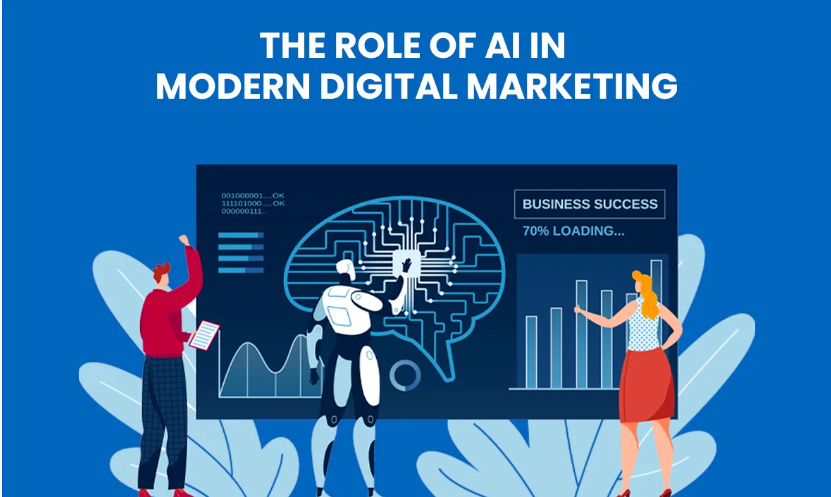
The Role of AI in Modern Content Marketing
Artificial Intelligence (AI) is no longer the future of content marketing, it’s the present. From automating content creation to personalizing customer experiences, AI is revolutionizing how brands plan, produce, and distribute content.
But what exactly does Artificial Intelligence bring to the table, and how can you use it without losing the human touch?
In this blog post, we’ll explore how Artificial Intelligence transforms modern content marketing, what tools drive this change, and how you can use it effectively to stay ahead of the curve.
What Is AI in Content Marketing?
Artificial Intelligence in content marketing refers to the use of machine learning and data-driven tools to create, optimize, distribute, and analyze content more efficiently and effectively.
It includes everything from natural language generation (NLG) and predictive analytics to chatbots and personalized recommendation engines.
Key Benefits of Artificial Intelligence in Content Marketing
1. Content Creation at Scale
Artificial Intelligence-powered tools can generate blog posts, captions, emails, and even video scripts, saving marketers hours of manual writing.
Tools like ChatGPT and Jasper can help brainstorm ideas, draft outlines, or even write entire pieces with a few prompts.
2. Personalization
Artificial Intelligence analyzes customer behavior and tailors content based on individual interests, behaviors, and past interactions, resulting in higher engagement and conversion rates.
Example: Netflix and Spotify use Artificial Intelligence-driven algorithms to suggest content uniquely suited to each user.
3. Content Optimization
Artificial Intelligence tools help you:
-
Identify the best keywords for SEO
-
Suggest better headlines or CTAs
-
Analyze competitor content
-
Improve readability and tone
Tools like Clearscope, SurferSEO, and Grammarly use Artificial Intelligence to help your content perform better.
4. Automated Workflows
Artificial Intelligence can schedule content, send personalized emails, or trigger campaigns based on user behavior, all without manual input.
Email platforms like Mailchimp and ActiveCampaign use Artificial Intelligence for automation and segmentation.
5. Audience Insights
Artificial Intelligence-powered analytics tools can analyze massive data sets in real-time, offering insights into:
-
What content performs best
-
When to post
-
What channels drive the most ROI
Real-World Use Cases of Artificial Intelligence in Content Marketing
-
Coca-Cola uses Artificial Intelligence to generate creative content ideas and track consumer sentiment online.
-
The Washington Post uses an Artificial Intelligence tool called Heliograf to produce short news reports and updates.
-
HubSpot integrates Artificial Intelligence into its CRM to help businesses craft personalized marketing messages based on user behavior.
Challenges and Ethical Considerations
While Artificial Intelligence is powerful, it’s not perfect. Here are a few caveats:
Lack of Human Emotion
Artificial Intelligence lacks intuition, creativity, and empathy. Content that’s too robotic can turn off audiences.
Tip: Use Artificial Intelligence to assist, not replace human creativity.
Brand Voice Risks
Artificial Intelligence-generated content can sound generic or off-brand if not carefully edited.
Tip: Always review and refine Artificial Intelligence-generated content to match your brand voice.
Misinformation & Bias
Artificial Intelligence tools may pull from biased or inaccurate data, especially if unsupervised.
Tip: Fact-check everything and train Artificial Intelligence tools with ethical, diverse data sources.
Top Artificial Intelligence Tools for Content Marketers
| Tool | Use Case |
|---|---|
| ChatGPT | Idea generation, drafting content |
| Jasper | Artificial Intelligence copywriting and marketing content |
| Surfer SEO | SEO optimization for blog posts |
| Canva Magic Write | Artificial Intelligence-assisted design and copywriting |
| Lumen5 | Video creation from blog content |
| Grammarly | Grammar, tone, and clarity suggestions |
| HubSpot AI | Personalized email, CRM insights |
How to Integrate Artificial Intelligence into Your Content Strategy
-
Start small: Use Artificial Intelligence for simple tasks like headline generation or repurposing content.
-
Stay human: Use Artificial Intelligence to speed up tasks, but keep the emotional intelligence and creativity human-led.
-
Train your tools: Feed Artificial Intelligence systems with relevant, high-quality data.
-
Test and refine: Track performance and optimize based on results.
-
Be transparent: If using Artificial Intelligence-generated content, especially in customer-facing communication, honesty builds trust.
✅ Final Thoughts
Artificial Intelligence isn’t here to replace content marketers, it’s here to empower them. When used strategically, Artificial Intelligence can help you scale your efforts, uncover deeper insights, and deliver more personalized, engaging experiences.


