
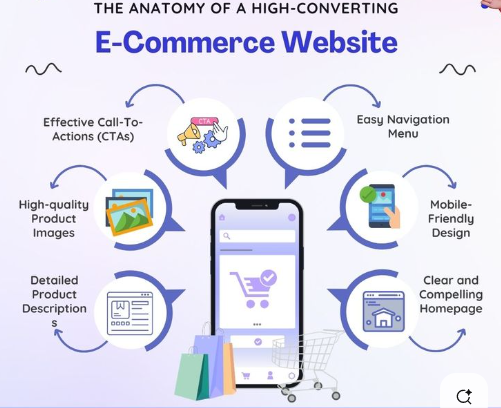
The Anatomy of a High-Converting E-Commerce Website
In 2025, a sleek design alone won’t cut it; your e-commerce website needs to convert. That means turning visitors into buyers, browsers into subscribers, and traffic into revenue. Whether you’re launching a new store or auditing an existing one, understanding the key elements that drive conversions is essential.
Here’s a breakdown of what makes a high-converting e-commerce website, from first click to final checkout.
🧠 1. Clear Value Proposition (Above the Fold)
The moment someone lands on your homepage, they should immediately know:
-
What you sell
-
Why it matters
-
How it helps them
What to include:
-
A bold headline with benefit-driven messaging
-
A supporting subheadline or tagline
-
A clear CTA (Call to Action), like “Shop Now” or “Start Saving Today”
Tip: Use compelling visuals and concise copy. Don’t make people scroll to understand your brand.
🔍 2. Easy, Intuitive Navigation
Confused visitors don’t convert. A logical, clutter-free menu helps people find what they’re looking for—fast.
Best practices:
-
Limit main menu items to 5–7 core categories
-
Add dropdowns for product types, collections, or use cases
-
Use filters and search functionality (with auto-suggestions)
-
Include a sticky header or mobile-optimized hamburger menu
🖼️ 3. High-Quality Product Pages
Product pages are your digital salespeople. They need to inform, reassure, and excite.
Key elements:
-
Crisp, zoomable images (multiple angles, lifestyle shots, videos)
-
Descriptive yet skimmable product descriptions
-
Clear pricing and shipping info
-
Product reviews and ratings
-
Size guides, FAQs, or comparison charts if relevant
Pro Tip: Add urgency or scarcity—like “Only 3 left in stock” or “Sale ends tonight.”
⚡ 4. Fast Loading Speed & Mobile Optimization
If your site takes more than 3 seconds to load, you’re losing conversions. And with mobile shopping dominating in 2025, mobile UX isn’t optional—it’s mandatory.
Improve by:
-
Compressing images and using next-gen formats (e.g., WebP)
-
Using mobile-first responsive design
-
Minimizing pop-ups and intrusive elements
-
Leveraging tools like Google PageSpeed Insights or GTmetrix
🛒 5. Streamlined Checkout Process
Cart abandonment is real—and often fixable. A clean, fast checkout reduces friction and boosts conversions.
Optimize by:
-
Offering guest checkout (no forced account creation)
-
Providing multiple payment options (credit, PayPal, Apple Pay, BNPL)
-
Showing shipping costs early
-
Minimizing form fields
-
Using progress indicators (e.g., 1. Shipping → 2. Payment → 3. Review)
🛠️ 6. Trust Signals & Social Proof
Online shoppers are skeptical. Earn trust at every step.
Add trust builders:
-
Verified reviews
-
Customer testimonials or user-generated content (UGC)
-
Security badges (SSL, payment protection, etc.)
-
Easy-to-find return policy and support contact
Bonus: Showcase press mentions, influencer endorsements, or certifications.
📧 7. Effective Email Capture & Retargeting
Not every visitor buys the first time. Capture leads and bring them back.
Tactics include:
-
Exit-intent popups with a first-time discount
-
Newsletter signup forms in the footer or during checkout
-
Abandoned cart emails with personalized product reminders
-
Retargeting ads synced with site activity
🔄 8. Smart Recommendations & Cross-Sells
Boost AOV (Average Order Value) by guiding shoppers to explore more.
Use tools or features to suggest:
-
Related products (“Customers also bought…”)
-
Recently viewed items
-
Product bundles or “complete the look” suggestions
AI-powered personalization tools like Nosto, Rebuy, or Klaviyo can help.
📊 9. Analytics & Heatmaps
What you can’t measure, you can’t optimize.
Track with:
-
Google Analytics 4 (GA4) for user behavior and sales attribution
-
Hotjar or Microsoft Clarity for heatmaps and session recordings
-
Conversion tracking pixels for Facebook, Google, TikTok Ads
Look for: The Anatomy of a High-Converting E-Commerce Website
-
Drop-off points
-
Popular click areas
-
Cart abandonment triggers
✅ Final Checklist: The Anatomy in Action
Here’s a quick summary to evaluate your e-commerce website:
✅ Clear, compelling hero section
✅ User-friendly navigation
✅ Optimized product pages
✅ Fast, mobile-friendly design
✅ Simple, secure checkout
✅ Trust-building elements
✅ Email capture strategy
✅ Smart product suggestions
✅ Conversion tracking tools
Final Thoughts on The Anatomy of a High-Converting E-Commerce Website
A high-converting e-commerce website is more than just a storefront it’s a finely tuned sales engine. By focusing on UX, trust, and performance, you’ll create a seamless shopping experience that turns clicks into customers.


